


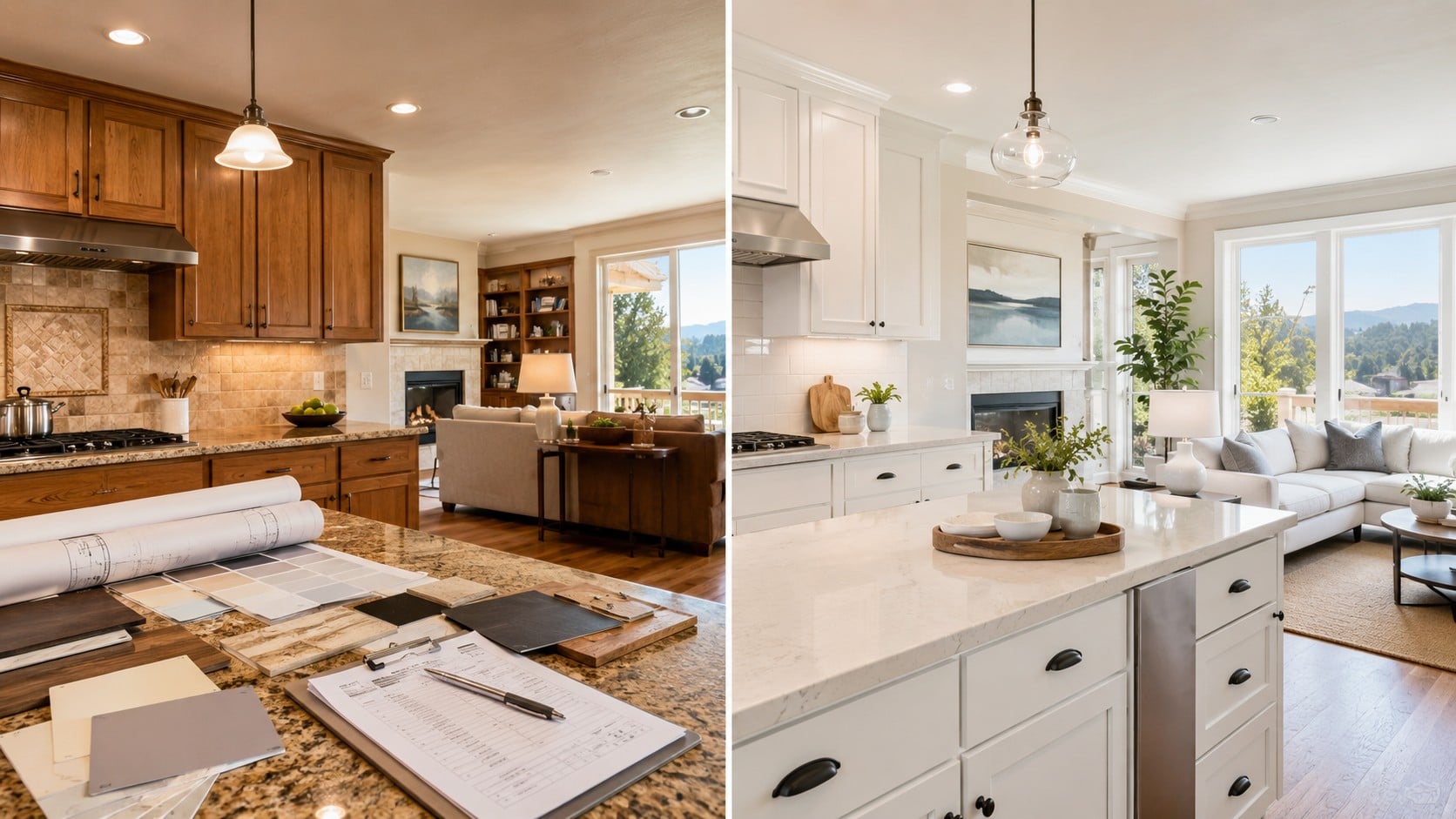
If you are thinking about selling your home, you may also be thinking about everything you need to fix, replace, update, or remodel before putting it on the market.
Should you redo the kitchen? Replace the flooring? Update the bathrooms? Paint the entire house? Improve the landscaping?
It can quickly become overwhelming and expensive.
One of the biggest mistakes I see sellers make is starting projects before they have a clear selling strategy. Before you call a contractor or start choosing finishes, there is a more important question to answer:
What improvements, if any, will actually help you sell?
Not Every Improvement Is a Good Investment
Homeowners naturally see their property differently than buyers do.
You may feel certain that your kitchen needs to be remodeled. But a buyer may be perfectly happy with the layout and prefer to choose their own finishes later.
Maybe the home would benefit more from fresh paint, updated lighting, landscaping, professional cleaning, or replacing worn flooring.
Just because something can be improved does not mean it should be improved before selling. The goal is to determine what will make the property most appealing to today’s buyers while protecting your time, money, and proceeds.
Start With the Buyer in Mind
When I evaluate a property before it goes on the market, I look at it through the eyes of a potential buyer.
What will they notice first? What will stand out in photos and online marketing? What might distract them from the home’s strongest features?
A darker room may need better lighting rather than a full renovation. An older property may feel dramatically fresher with paint and flooring. An overgrown yard may simply need cleanup and landscaping.
The question should always be:
Where will the seller get the greatest benefit for the money and effort being spent?
Be Careful About Remodeling for Your Own Taste
You may love a certain cabinet color, tile, countertop, or flooring style, but the next buyer may have completely different taste. You could spend thousands creating something a buyer plans to change anyway.
This is especially important with kitchens and bathrooms. Sometimes buyers would rather purchase the property at a price that reflects its current condition and make those decisions themselves.
There Is a Middle Ground: As-Is Plus
Many homeowners believe they have only two choices. They can sell completely As-Is or spend months preparing and remodeling for a traditional sale.
There is another option that I frequently discuss with sellers. I call it As-Is Plus.
As-Is Plus is the strategic middle ground.
Instead of doing everything or doing nothing, we identify a limited number of improvements that may help the property show better, photograph better, and appeal to more buyers.
That could mean fresh paint, updated lighting, new flooring, improved curb appeal, minor repairs, professional cleaning, or removing items that make the property feel dated or crowded.
It is about being selective and putting money where it is most likely to make a difference.
Sometimes the Best Advice Is What Not to Do
Sellers are often surprised when I walk through a property and tell them there are things I would leave alone.
Every dollar spent preparing a property should have a purpose. If you spend $20,000 on improvements, you should understand what you expect those improvements to accomplish.
Will they increase the sale price? Help the home sell faster? Improve the first impression enough to attract more buyers?
If the answer is unclear, it may be worth reconsidering the project.
Your Timeline Matters Too
A major remodel can take weeks or months. Contractors may be unavailable, materials can be delayed, and one project can uncover another issue.
Meanwhile, you are still carrying the property. That can mean additional mortgage payments, property taxes, insurance, utilities, and maintenance.
That is why the potential increase in sale price should not be looked at in isolation. You also need to consider the cost of waiting.
For some sellers, a shorter preparation period and an earlier sale may be more valuable than taking on a major renovation.
Your Situation Should Drive the Strategy
A homeowner who has already moved may have different priorities than someone still living there. A trustee handling an inherited home may want a simpler process. Someone downsizing after decades in the same house may not want to coordinate a large renovation.
Another seller may have the time and resources to make more extensive improvements because the potential return justifies it.
Once you understand your goals, timeline, budget, and how involved you want to be, it becomes much easier to decide whether the best approach is As-Is, As-Is Plus, or Traditional.
Before You Upgrade a Thing, Know Your Options
Preparing a property for sale does not have to mean remodeling everything.
In many cases, the best results come from making a few thoughtful changes rather than taking on a long and expensive renovation.
The right strategy could be doing quite a bit. It could be doing very little. Or it could be somewhere in between.
So before you replace the countertops, order new cabinets, or start tearing out flooring, take the time to understand how your property is likely to compete in today’s market.
Before you remodel, start with strategy.
The goal is to make decisions that give you the best opportunity for a successful sale without spending money where you do not need to.
Check out this article next